A Bird in a Cage
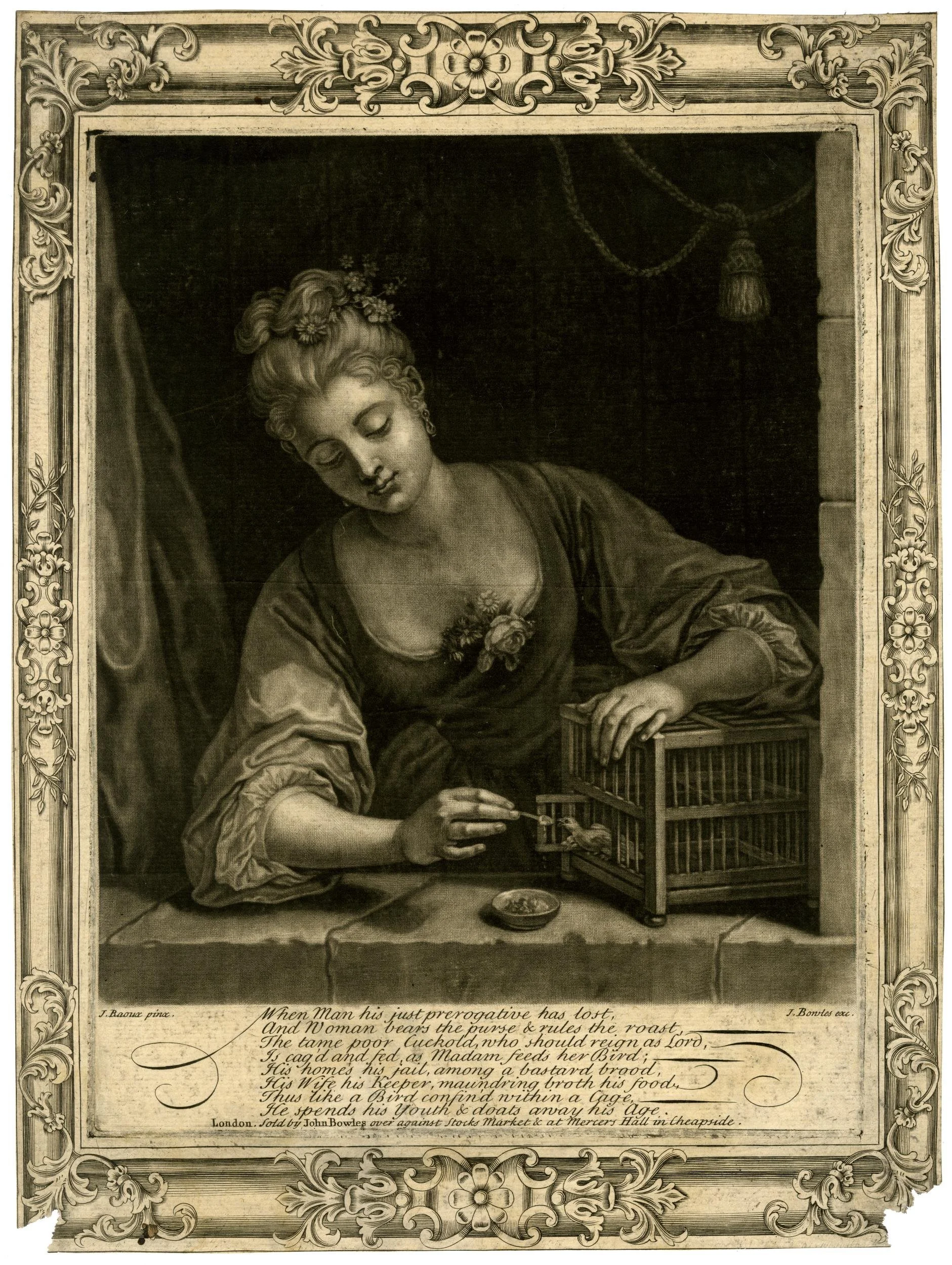
Figure 1: Untitled print (c.1730). Copyright of the Trustees of the British Museum 1988,0514.62.
This month’s print sets a trap. Figure 1, an untitled print from c.1730, shows a beautiful woman feeding her pet bird, tiny spoon and tiny beak meeting in a moment of everyday tenderness [1]. The verses call that moment a lie. What looks like tenderness is really cruelty:
When Man his just prerogative has lost,
And Woman bears the purse & rules the roast,
The tame poor Cuckold who should reign as lord,
Is cag’d and fed as Madam feeds her Bird;
His home his jail, among a bastard brood,
His Wife his keeper, maundring broth his food,
Thus like a Bird confin’d with a Cage,
He spends his Youth & doats away his age.
Pity the poor husband, snared by female beauty. He who should be patriarch has been unmanned by a woman, works to keep the children she has by other men, and lives only as she pleases, like the bird in a cage. The tone unsettles because it is ambivalent: the print attracts and repels. Men are lured by pretty face and a hint of breast and then warned that desire will lead them to humiliation. This is the male gaze, inverted.
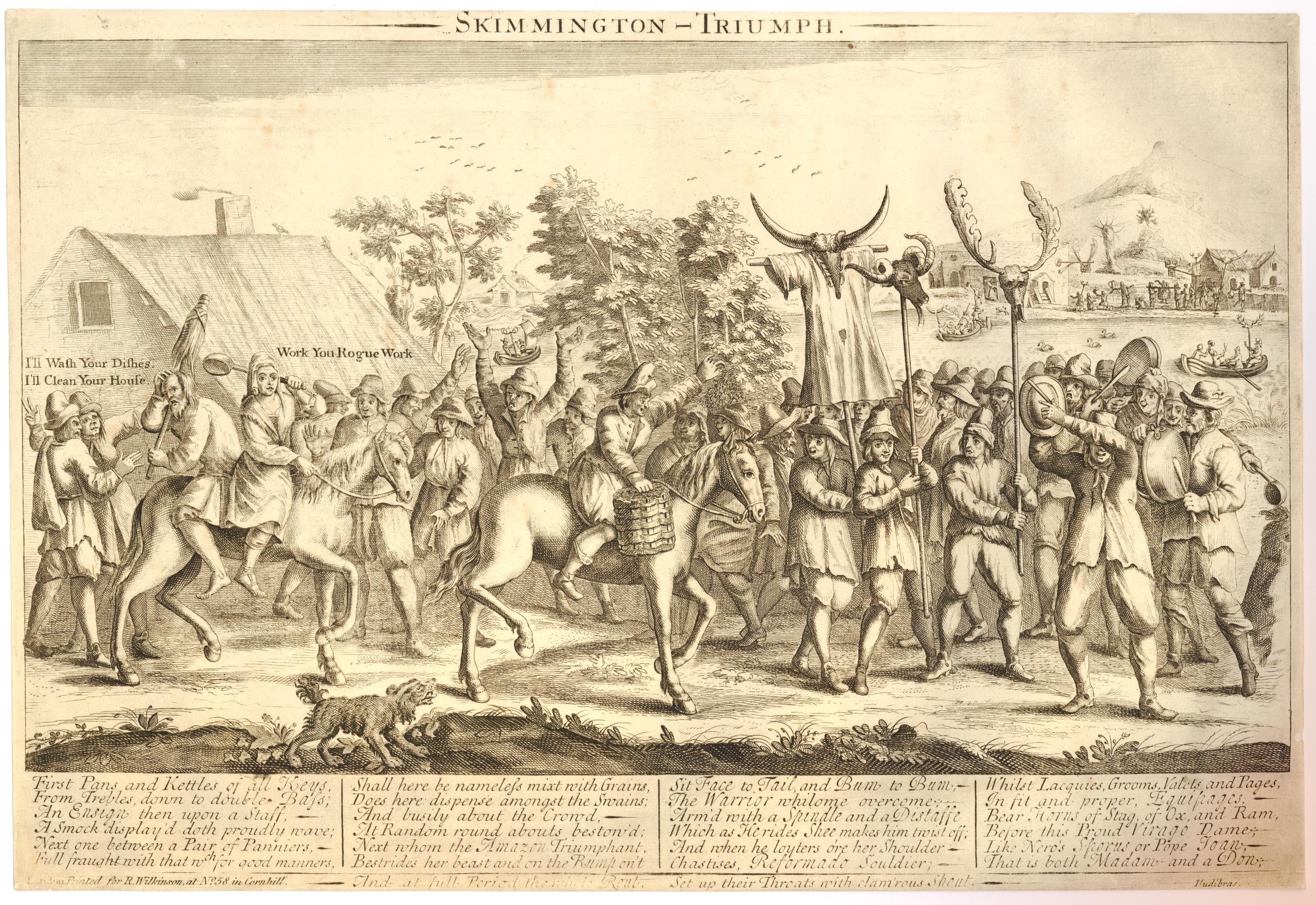
Figure 2: Skimmington Triumph; Or, the Humours of Horn Fair (c.1720), Copyright of the British Museum 1868,0808.13165.
The print was published by John Bowles between the mid-1720s and mid-1730s. Copies survive in various sizes and states, some framed, like figure 1, and some not [2]. This popularity is unsurprising. The print told an old joke – all wives were shrews, scolds, and whores; and all husbands were cuckolds – that was a commonplace of horn humour of ballads, jestbooks, and the stage [3]. But the tone the image used to express those commonplaces is surprising. Images of cuckolds were normally aggressive and jeering. They depicted the public shaming of skimmingtons, where men were paraded through their community on an ass to a cacophony of pots and pans beaten by their neighbours [figure 2] [4]. They showed cuckolds witnessing their own humiliation, catching their wives and lovers in the act [figure 3] [5]. Or, most commonly, they pictured cuckolds with horns growing from their heads as a physical mark of their shame as failed men [figure 4] [6].
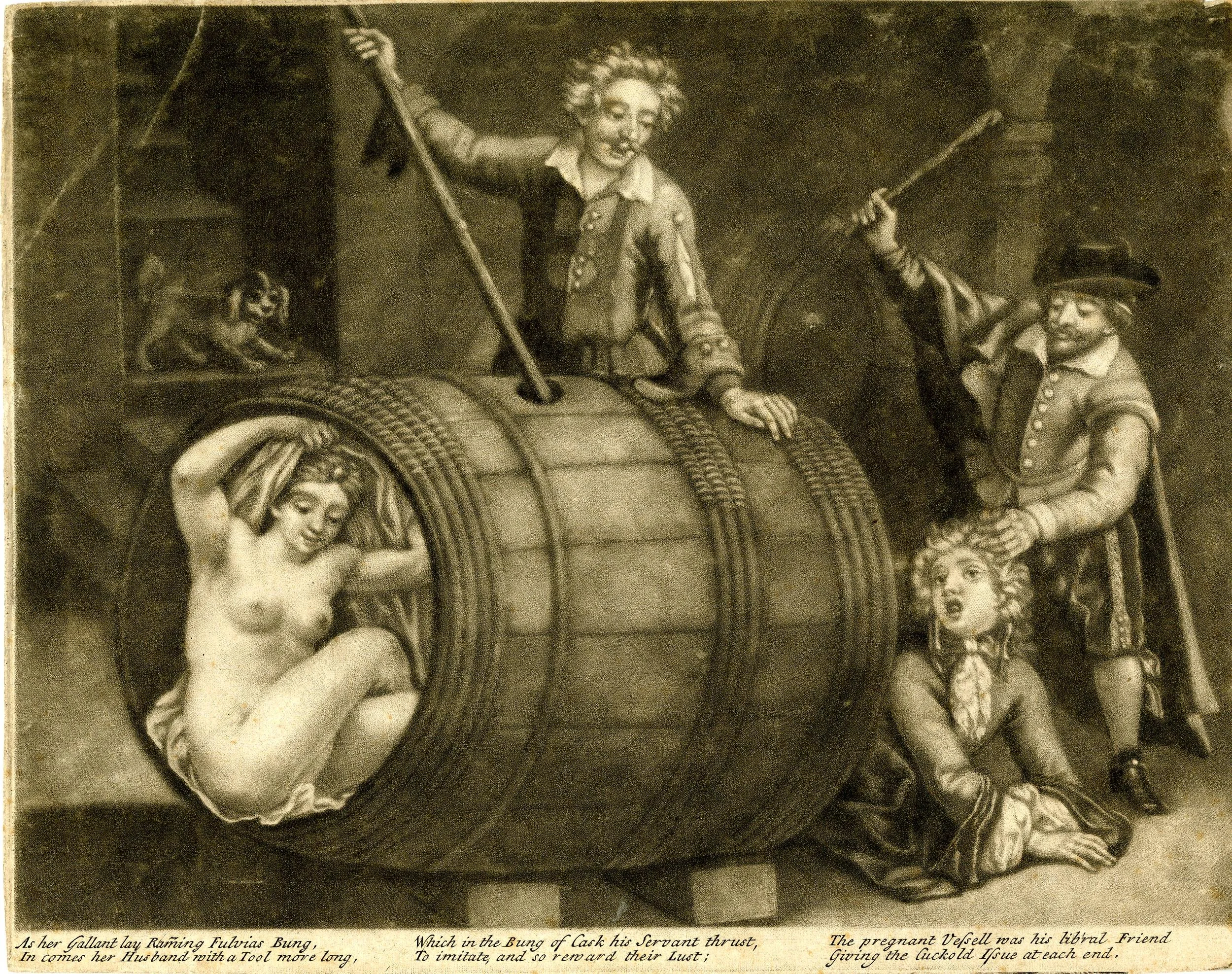
Figure 3: Untitled print. Copyright of the British Museum BM 2010, 7081.319.
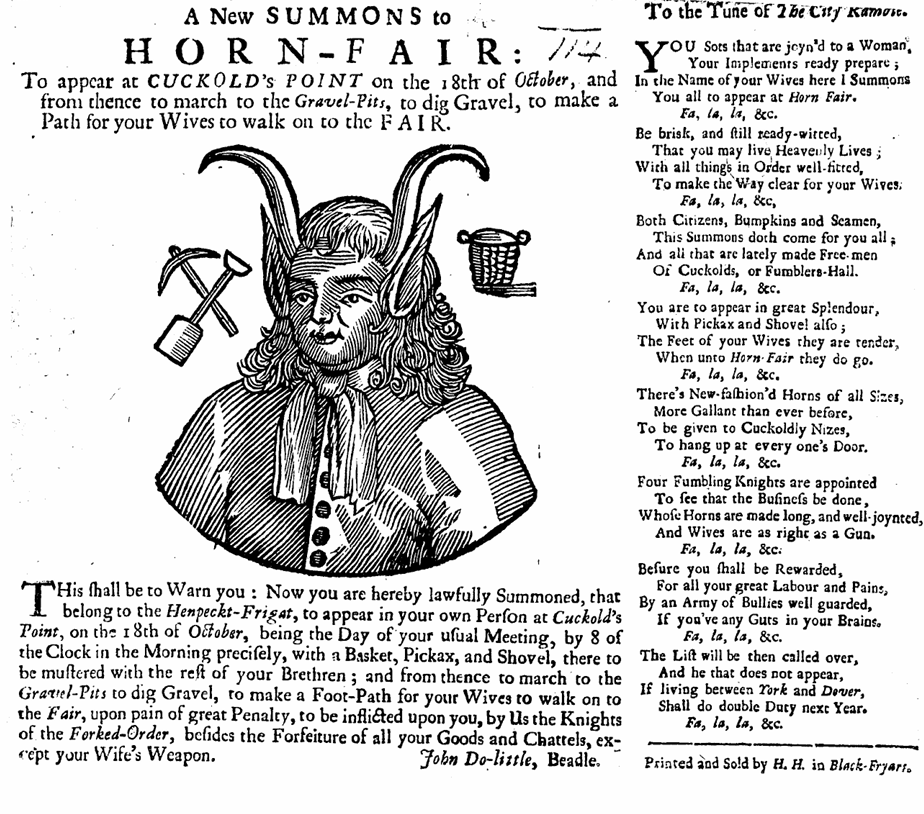
Figure 4: A New Summons to Horn Fair (c.1700). Copyright Early English Books Online.
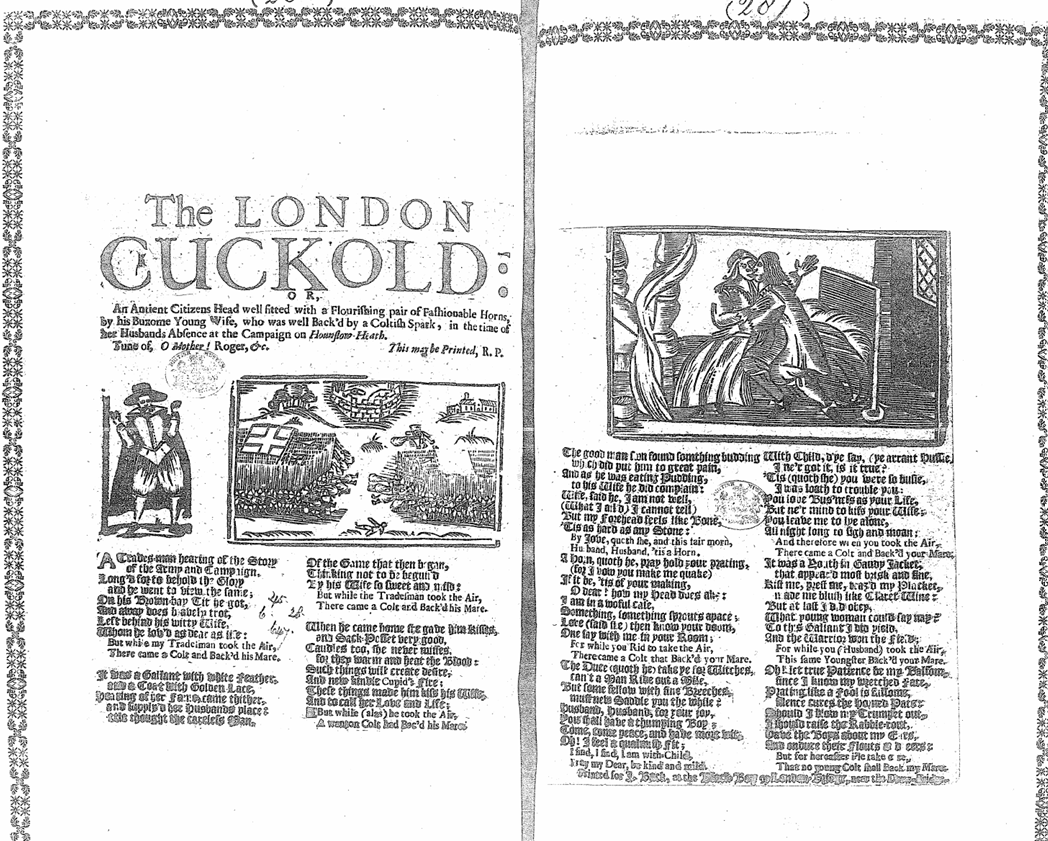
Figure 5: The London Cuckold; or, an antient citizens head well fitted with a floursing pair of fashionalble horns (1688). Early English Books Online.
Horns were a mark of opprobrium. Neighbours posted horns (or drawings of horns) on the doors of cuckolds to mock husbands who were scolded or beaten by their wives [7]. Woodcuts of horned men announced the subject and tone of ballads. The London Cuckold; or, an antient citizens head well fitted with a floursing pair of fashionalble horns (1688) tells of a soldier returning home to find himself unmanned, summarising the story in three images, a battle, two lovers in bed, and a cuckold in shock [figure 5] [8]. Horns derided the cuckold as a dull beast. He was tamed by his wife, like an animal led by the nose [9]. Or he was ‘horn mad’ with jealously, having lost the most masculine attribute, reason [10]. This made him bestial, like when Othello became consumed with images of Desdemona sleeping with Casio, losing the powers of speech and consciousness:
Lie with her? lie on her? We say “lie on her” when they belie her! Lie with her—that’s fulsome. Handkerchief—confessions—handkerchief! To confess, and be hanged for his labour. First to be hanged, and then to confess—I tremble at it. Nature would not invest herself in such shadowing passion without some instruction. It is not words that shake me thus. Pish! Noses, ears, and lips. Is ’t possible? Confess!—Handkerchief!—Oh, devil!—
[Falls into a trance]
Othello was bestial from this point, threatening violence and chaos on his wife and her lover. “Oh, I see that nose of yours, but not that dog I shall throw it to [….] I would have him nine years a-killing […] Ay, let her rot and perish and be damned tonight, for she shall not live […] I will chop her into messes! Cuckold me?” No more the noble Moor [11].
In popular print the ‘horn mad’ cuckold was a comic figure rather than a tragic one – pathetic, not pitiable. The Horn Exalted, Or Room for Cuckolds (1720), was a mock-scientific tract treating various type of horns as species of the same genus. Each type of anima horn captured the temperament of a type of cuckold. The horns of timid sheep were fitting for ‘loving and good natur’d’ cuckolds who naively trusted their wives. Those of bulls fitted hectoring cuckolds, whose lusty pursuit of other women left their wives neglected, and open to the attentions of other men [12]. Cuckolds’ horns were an aggressive image made to belittle. They were consequently used to protest – humiliating local magistrates who had evoked a community’s rage – and to police – reaffirming the patriarchal order by shaming men who broke them [13]. Men feared being subject to them. In The Merry Wives of Windsor, Ford can hear the taunting names he will be called in the street when his horning becomes public knowledge:
See the hell of having a false women [….] I shall […] stand under the adoption of abominable terms […] Terms! Names! […] they are devils’ additions, the names of fiends. But cuckold? Wittol? Cuckold! The devil himself hath not such a name […] Fie, fie, fie; cuckold, cuckold, cuckold! (2:2: 280-302).
Similarly, in The Winter’s Tale Leontes panics when he fears being cuckolded – ‘O, that is entertainment/ My bosom likes not, nor my brows’ (1.2: 119-20). His thoughts spiral, he becomes overrun with images of horns and sees himself as others will see him – a laughingstock
….so disgraced a part, whose issue,
Will hiss me to my grave; contempt and clamour
Will be my knell (1:2: 188-90).
Leontes fears the horns mocking him to death [14].
Our image departs from the norms of horn humour in two ways. First, it is not aggressive. The print is not mocking, bestial, or raucous. It is, conversely, beautiful. Second, the focus is on the wife as cuckolder rather than on the husband as cuckold. These differences are revealing. The image speaks to male fear that their desire for women makes them vulnerable to women. The print acts out the fear. The image entices the eye; the text warns of the danger. The print fools the viewer just as women fool men.

Figure 6: Jean Ravoux, Jeunes fille qui voler in oiseau (1717).
The print was after the French painter Jean Ravoux (1677-1734), who made a name for himself as a genre painter in London during the 1720s, producing series of the four ages of man, the four seasons, the elements, and the hours [15]. However, Ravoux’s real stock in trade was, to quote the Christie’s website, “bust-length depictions of pretty women in elaborate costumes” [16]. Ahem. Well, quite. Ravoux’s paintings teetered on voyeuristic, inviting viewers to look through windows at women who did not know they were being watched. In one painting, Jeunes fille qui voler in oiseau (1717), a young woman trains a bird to fly [figure 6]. An engraving by Jacques Chereau inverted the message: women trap rather than free [17]. The English version of Chereau’s print added verses warning that marriage was a cage [figure 7]:
As the mischievous smiles, methinks I hear
The Maiden cry, - ‘Thus Lovers we ensnare;
Thus cruell still with Hope we feed their Flame,
And their wild Thoughts in nuptial Bondage tame:
The Quiet matrimonial Cage,
No more in vain for Liberty they rage;
But with false Joy, they seem content to be
Knowing that Death alone can set them free [18].
Figure 1 extended the metaphor: men were undone by their desire for women.
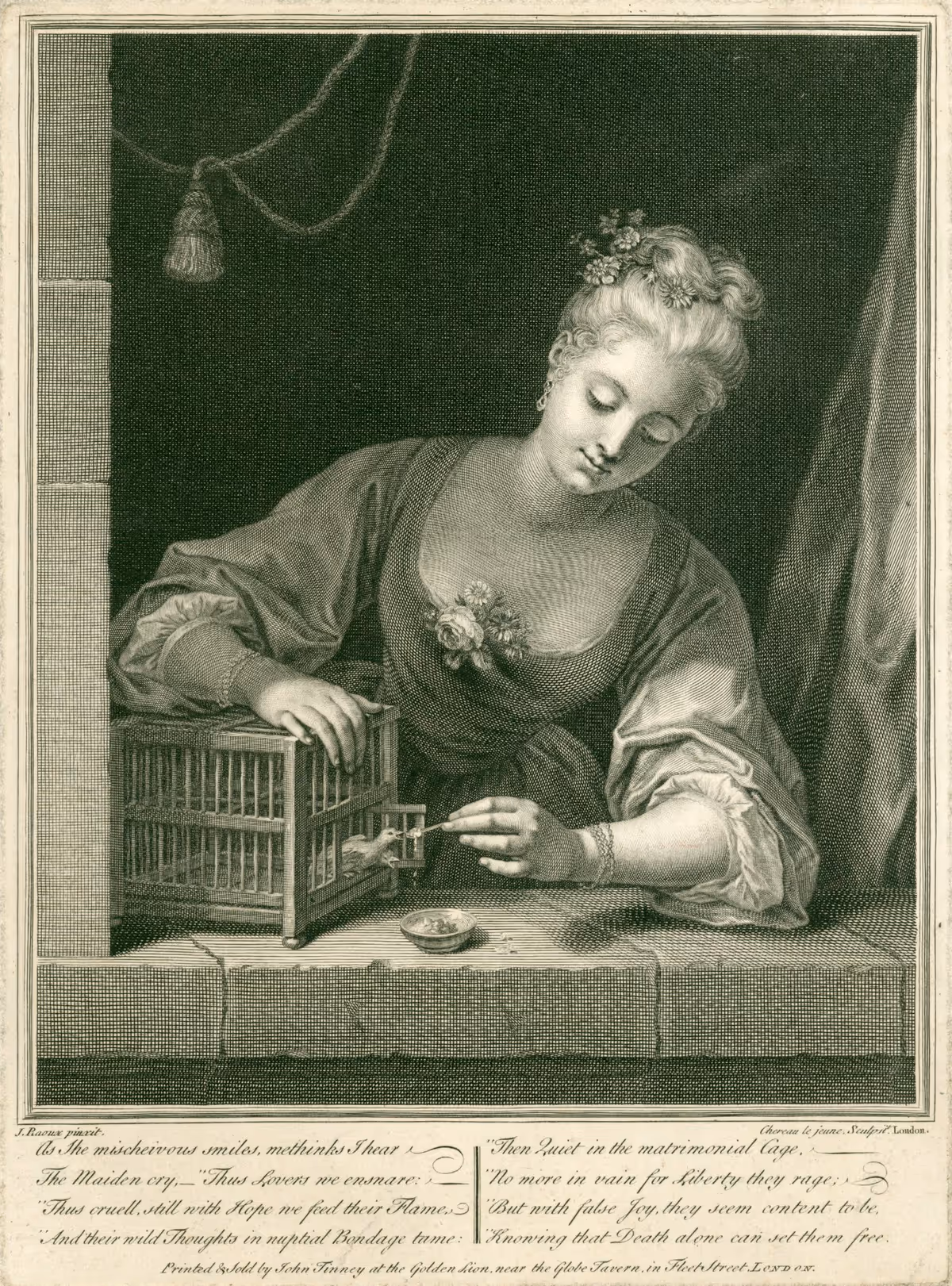
Figure 7: Untitled print (c.1730). Copyright of the Royal Academy 04/1995.
This was not an original point. The popular culture of sixteenth- and seventeenth-century England was littered with humour in the same vein. The henpecked husband was a stock comic figure, hounded, beaten, impoverished, and often cuckolded by his domineering wife. That humour rested on inversion: a mannish woman and a womanish man. Ballads like My Wife Will be my Master; Or, the Married Man’s Complaint (1679), in which a husband complains that his wife could overpower Hercules, outsmart Apollo, and imprison Icarus, was typical [19]. But inversion is only part of the story. Many ballads present cuckolded husbands lamenting that they had succumbed to desire and despairing that the sweet maid they courted had entrapped them. The Cuckold’s Lamentation for a Bad Wife (c.1670) warns young men to escape his fate:
Besides she makes him for to where the Horns,
And he wishes that he never had been born:
To all young Batchelours now he doe declare,
When they goe a Wooing for to have a Care,
There’s many Maids good, but some proves evil,
His luck was bad, he met with a She-Devil [20].
Jestbook and ballad humour presenting all men as cuckolds (and therefore all women as whores) was equally common. One song in the bawdy ballad collection The Fifteen Comforts of Cuckolds (1706) warns men that all women “in publick whore”, leading men to ruin. There was only one safe option: “….to avoid so bade and curst a life,/ The only ways is to live without a wife” [21]. Other jests depended on a husband’s ignorance of his wife’s true nature. In John Taylor’s Wit and Mirth, we find the following jest:
A Man going with his wife by a deeper riverside, began to talke of cuckolds, and withall he wisht that every cuckold were cast into the river: to whom his wife replys, husband I pray you learne to swimme [22].
Other jests, conversely, focussed on the solidarity men found in the everyman nature of cuckoldom. The Catalgoue of Contented Cuckolds (1685) tells of ten cuckolds meeting in an alehouse to form a society “of the forked order” and drown their “melancholy in a Glass of Necktare” [23]. Just as our print warned, all these men had not seen their fate coming because they were blinded by their desire for women.
The tone and purpose of this humour was different to the mockery of skimmingtons or the taunting of horns. In these jokes, cuckolds were not lesser men but all men. Our image is in this vein. It presents loss of freedom (figure 7) or cuckoldry (figure 1) as the inevitable fate of husbands. Why was this funny? What were people laughing at?
Recent work has suggested that this is the wrong question. Rather than focussing on the content of jokes – misogyny, in the case of horn humour – emphasis now falls on the context in which they were told. That shift has led to humour being read as a lubricant of social life rather than as a mocking correction of errant behaviour: its purpose was pleasure, not proscription [24]. In a study of Shakespearean humour, Indira Ghose has argued that humour on stage was concerned with entertainment, not reaffirming gender norms or patriarchal authority. Drawing on neuroscientific studies that show laughter to be a means of communication, Ghose argues that humour signalled that a group of people (the audience, in this instance) were willingly entertaining a state of play [25]. Carla Roth’s study of obscene jests in Swiss city of St Galen during the sixteenth century has stressed the social capital of humour. Jests, Roth argues, won their male teller status that distinguished them from their peers. Gendered jokes were therefore not primarily concerned with aggression towards women, or relieving male anxieties about their roles as patriarchs, but with good fellowship, a means by which men competed in fraternal battles of wits [26]. Coppelia Khan has also stressed the homosocial aspects of humour. “If women are all whores”, Khan writes, then “men are all cuckolds, and therein brothers” who could share in laughter [27]. Horn humour may appear to set men laughing at each other, but in reality it created a bond forged in their shared humiliation by women.
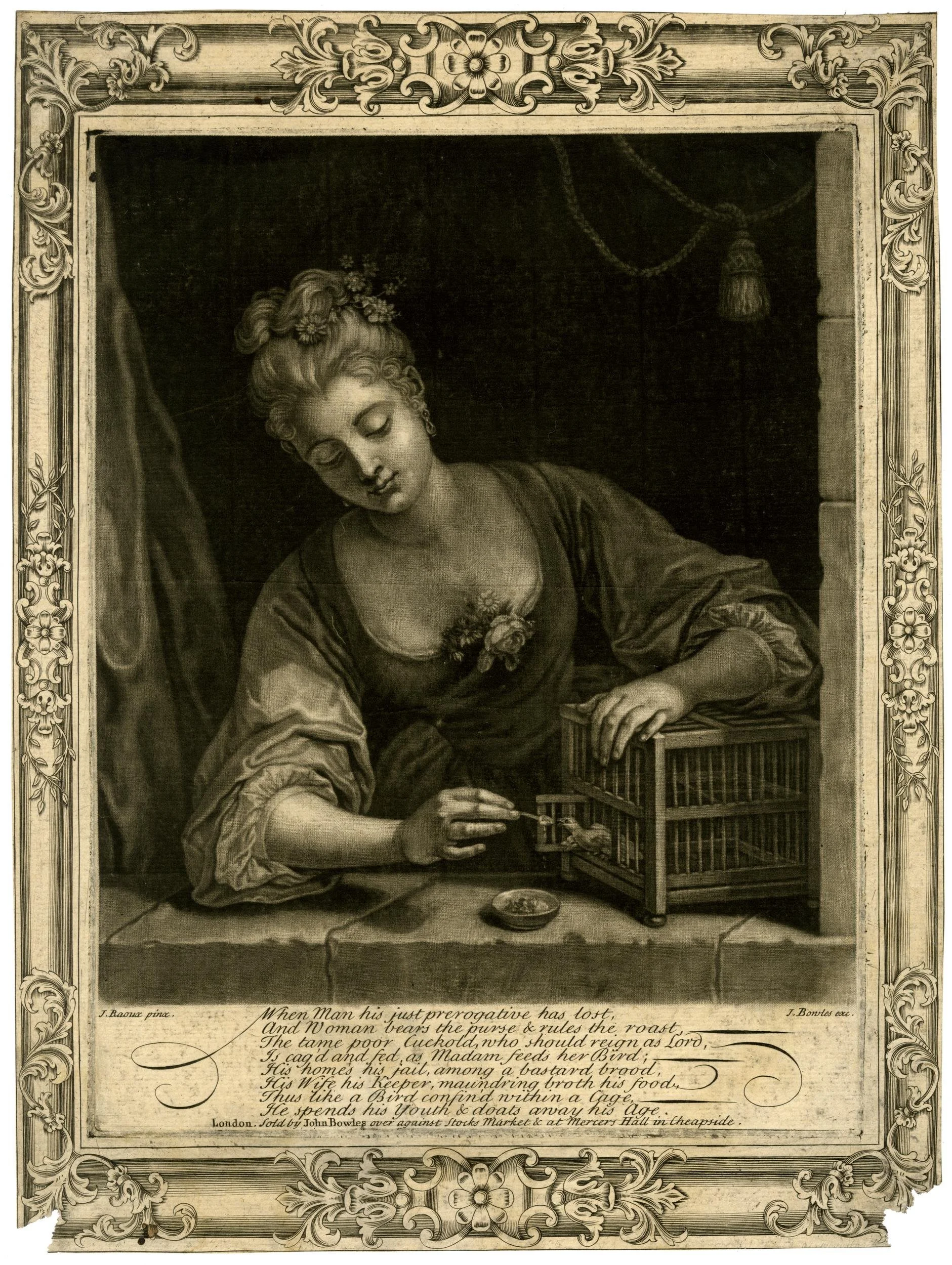
Figure 1
The emphasis these readings place on the context of a joke being as important as its content is vital to understanding the role of humour in early modern society. But to my mind, the contrast they draw between humour as playful or didactic, pleasurable or proscriptive, is misplaced. Jokes were often both of those things [28]. Our image was playful – it tricked the viewer by appearing to be what it was not. But the point of the trick was to warn the (male) viewer – be careful what you desire. Play and proscription were not in tension but worked together to deliver an unsettling lesson. The print told men that they were superior to the cuckolds they laughed at while also reminding them that they were vulnerable to becoming the butt of the joke. In toying with men’s fear of women, the joke surely made those fears worse [29]. This laughter was nervous and unnerving.
References.
1: British Museum [BM] 1988,0514.62; Chaloner Smith 1883.
2: John Bowles sold prints from 1723. Other version of the print include BM 1988,0514.28 (framed) and 2010,7081.113 (smaller). Royal Academy 04/1995 (unframed).
3: For a sense of how extensive horn humour was in early modern England, see Roger Thompson, ‘Popular Reading and Humour in Restoration England’, Journal of Popular Culture (1975): 653-72 at 661-4; David M Tuner, Fashioning Adultery: Gender, Sex, and Civility in England, 1660-1740 (Cambridge, 2002), chapter 3; Susan D Amusen, ‘Cuckold’s Haven: Gender & Inversion in Popular Culture’, in Malcolm Smuts, ed., The Oxford Handbook of the Age of Shakespeare (Oxford, 2010), 528-42.
4: Skimmington Triumph; Or, the Humours of Horn Fair (c.1720), BM 1868,0808.13165.
5: BM 2010, 7081.319. After Johann Theodor de Bry.
6: A New Summons to Horn-Fair (c.1700); Hey For Horn Fair: the general market of England (1676); The London Cuckolds; or, an antient citizens head well fitted with a flourishing pair of fashionable horns (1688); ‘Cuckold’s Haven’, in Roxburghe Ballads (Spenser Society, 1874), vol.1, 201-7.
7: Adam Fox, ‘Ballads, Libels and Popular Ridicule in Jacobean England’, Past & Present, 145 (1994): 47–83.
8: The London Cuckold; or, an antient citizens head well fitted with a floursing pair of fashionalble horns (1688)
9: Turner, Fashioning Adultery, 88.
10: See ‘Household Talke: or, Good Counsell for a Married Man’, in Roxburghe Ballads (London, 1874), vol. II, 60-67 for ‘horn mad’; Horn Exalted (1660), 35-37, 53-57.
11: Coppelia Khan, Man’s Estate: Masculine Identity in Shakespeare (University of California Press, 1981), pp
12: The Horn Exalted, Or Room for Cuckolds (1660), 11-17, 20, 53-4.
13: Martin Ingram, ‘Ridings, rough music and the “Reform of popular culture” in early modern. England’, Past & Present 105 (1984): 79–113
14: Coppelia Khan, Man’s Estate: Masculine Identity in Shakespeare (University of California Press, 1981), pp. 125-30.
15: See Jean Raoux | Museum Collection | Getty www.getty.edu/art/collection/person/103JR2.
16: www.christies.com/en/lot/lot-4969806 Jean Raoux Montpellier 1677-1734 Paris , A young lady reading | Christie's
17: Royal Academy 04/1995. Etching, c.1730. Published by John Tinney and engraved by Jacques Chéreau.
18: Ibid. See also National Portrait Gallery D11880.
19: My Wife Will be my Master; Or, the Married Man’s Complaint (1679), single sheet.
20: The Cuckold’s Lamentation for a Bad Wife (c.1670), single sheet. This ballads contains an image of a horned cuckold being beaten by his wife. Other warnings include, The Contented Cuckold, or Patience upon force is a Medicine for a Married Men (c.1670); My Wife Will be My Master; Or, the Married Man’s Complaint (1679); ‘The Lamentation of a new Married Man’, in Roxburghe Ballads (London, 1874), vol. II, 318-28; ‘The Batchelor’s Feast, or, the difference betwict a single and a double’, in Roxburghe Ballads, vol.1, 60-66.
21: The Fifteen Comforts of Cuckolds (1706), song 15. See also song 14.
22: John Taylor, Wit and Mirth in the Works of John Taylor, the Water-Poet (Spenser Society, 1869), p. 348. See also pp. 345, 347, and 359-60.
23: The Catalogue of Contented Cuckolds (1685), single sheet.
24: See, for example, Cathy Shrank ‘Mocking or mirthful? Laughter in early modern dialogue’, in Mark Knights and Adam Morton, eds., The Power of Laughter and Satire in Early Modern Britain (Boydell, 2017); Claire McEachern, ‘Why do Cuckolds Have Horns?’, Huntington Library Quarterly, 71 (2008): 607-31, especially 610, 615, 620, 629-30.
25: Indira Ghose, Shakespeare and Laughter: a cultural history (Manchester, 2008), 4-8 and 103-107, in particular.
26: Carla Roth, ‘Obscene Humour, Gender, and Sociability in sixteenth-century St Gallen’, Past & Present (2017): 39-70, especially 43-45 and 68-70.
27: Coppelia Khan, Man’s Estate: Masculine Identity in Shakespeare (University of California Press, 1981), pp. 119-47, quotation at 125.
28: This is a view I took in Adam Morton, ‘Popery, Politics, and Play: visual culture in Succession Crisis England’, The Seventeenth Century, 31 (2016): 411-49; and Adam Morton, ‘Laughing at Hypocrisy: The Turncoats (1711), visual culture, and dissent in early eighteenth century England’, Studies in Church History, 60 (2024): 312-39.
29: For other perspectives on the history of laughter, see Mark Knights and Adam Morton, eds., The Power of Laughter and Satire in Early Modern Britain (Boydell, 2017).