Kissing the Pope’s Foot.
This month’s blog post is slightly longer than usual. It is the text of the paper I gave at a conference, ‘John Michael Wright: New Perspectives and Directions’, held at the National Galleries of Scotland on 26th October 2023. I would like to thanks to organisers, Kate Anderson and Catriona Murray, for the opportunity to speak at this excellent event. John Michael Wright (1617-94) is an understudied artist, who trained in Edinburgh under George Jameson and became a prominent painter at several Stuart courts, as well as a curator at the court of Archduke Leopold Wilhelm of Austria. Wright painted Charles II, the Duke of Albermarle, members of the Arundell family, Sir Neil O’Neil, Lord Mungo Murray, and many other leading figures in Cromwellian and Restoration England and Scotland. This paper relates chiefly to his involved in the design of printed images.
My interest in John Michael Wright relates to the extraordinary imagery in his Account of the doomed embassy to Rome undertaken by Roger Palmer, earl of Castlemaine, in 1686-7. Palmer had been sent by James VI/I to re-establish diplomatic relations between England and the Papacy. Things did not go to plan. Wright, who was involved in designing Palmer’s entrance procession into Rome, tried his best to sell defeat as victory. Printed images were crucial to his efforts.
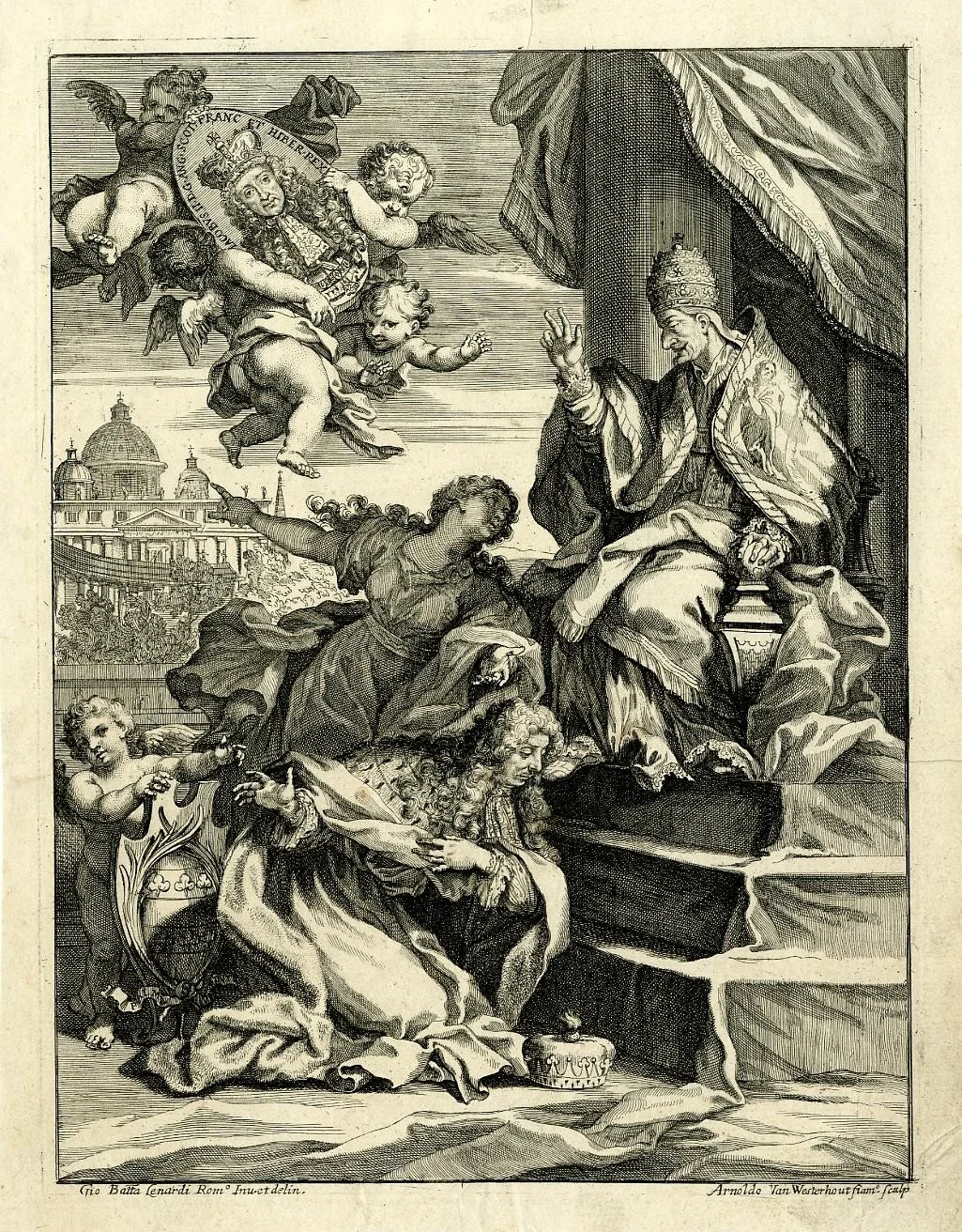
Figure 1: Frontispiece. John Michael Wright’s Account of his Excellence Earl of Castlemaine’s Embassy to His Holiness Innocent XI (1687).
I want to focus on one extraordinary image in particular, the frontispiece [Figure. 1]. [1] This showed Palmer – as James VII/II’s representative – kissing the foot of Pope Innocent XI, a traditional act of homage through which all Catholics – including princes – recognised the pope’s position as St Peter’s representative on earth. The angels lowering a portrait of James into the scene hammered home the image’s point: the embassy prefigured the re-established the submission of the English monarchy (and perhaps its church?) to the Rome. I call the image ‘extraordinary’ for two reasons. First, its tone – prostration before the Pope – misunderstood James’s intentions in re-establishing diplomatic relations with the papacy. He was not interested in yielding anything. The image bears witness to Palmer’s not being very bright; and losing a battle of wits with king James was quite an achievement. Second, the frontispiece’s iconography inverted central features of anti-Catholic imagery that had been a prominent part of post-Reformation English culture for 150 years. ‘Kissing the pope’s foot’ was a central motif of papal tyranny and idolatry. That it was printed in England in 1687 – when many spanners were being thrown into many works – seems extraordinarily inflammatory. The image tells us either that hope springs eternal in the heart of devout; or that John Michael Wright had a mischievous sense of humour.
In September 1685 James decided to re-establish diplomatic relations with Rome, the first English monarch to do so since Mary I 130 years earlier [2]. Ferdinando D’Adda arrived in England as the papal envoy that November, and James appointed as ambassador Roger Palmer, a Catholic supporter of the Stuart crown who had served under James during the second Dutch War of 1665-67. Palmer was an odd choice. He had no diplomatic experience and was known for two things: having been suspected of plotting against Charles II during the Popish Plot (and defending himself admirably during his trial); and being the husband of Charles II’s favourite mistress, Barbara Palmer, with whom the late king had sired several children. Palmer’s promotion to the nobility – as baron and then earl – rested on his wife’s favours (a humiliation made explicit by the inclusion of a clause that meant only children he had with Barbara would retain the title). The humiliation caused him to leave England in the early 1660s. The French ambassador, Barrillon, noted wryly that it was inauspicious for diplomatic relations that James had chosen Europe’s most famous cuckold to represent his honour [3].
And so it proved. Palmer was a champion of his faith. His promotion of Catholic loyalty after the fire of London (a disaster initially blamed on Catholic perfidy) led to paper skirmishes with leading Protestants like Edward Stillingfleet, and his defence of Catholics accused in the Popish Plot led to his experiencing the eye of that nasty storm [4]. His faith may have caused him to misread his role as ambassador, which was not to announce to the world that the Stuart kingdoms were returning to Roman fold. James II’s authority was anomalous – he was the Catholic head of a Protestant church – and consequently uneasy. In that context, he had no intention of submitting to the Pope, or of renouncing his authority over the English Church. His gave Palmer clear instructions: the crown would not yield the right to nominate bishops in England or Ireland, citing similar rights granted to the French and Spanish crowns, and precedents by Henry VIII and Mary I. The implication of the instructions was clear. James had suffered for the faith, and the Pope should rest assured that he would defend it on his own terms.
Innocent XI was not assured. Relations between crown and papacy were frosty. The pope thought James too close to Louis XIV, who had refused to join the Holy League Innocent founded to defend Hungary and the Balkans from the Ottoman Empire. James’s insistence on retaining authority over the church only increased Innocent’s suspicions, smacking as it did of Gallicanism. Relations were further soured by James’s insistence that the pope appoint his confessor, the Jesuit Edward Petre (suspected in England of being the prime mover in the perfidious arts of popery) as bishop. Innocent – who disliked Jesuits – refused, politely citing technicalities in the society’s charter which forbade appointment to a diocese. Misreading the rebuff, James asked ‘how about Cardinal, then?’ instead. Innocent was annoyed, James was mystified at not getting his own way, and Palmer, unable to read the room, continued to report unhelpfully that the pope would change his mind. Meanwhile, the embassy got nowhere. Petre made things worse still by seeing the whole sorry episode in the history of international relations as a conspiracy against him personally. Innocent, fed up, asked for Palmer to be recalled. The only thing his embassy achieved was the promotion of the queen’s uncle, Renaldo D’Este, to cardinal [5].
Wright, then, didn’t have much to account for in his Account. As such, he turned to cliches. Heroic verses celebrate James as Casaer and Hercules. Palmer’s blushes were not spared either:
When Palmer’s mighty Triumph now came one,
With Latian Dames [6] and Crowded Casements shone.
Old Rome his Train and Chariots did survey,
And seem’d again in the Flaminian Way [7].
Do we (says she) as Maro sung, still find
The hardy Britains from the World disjoyn’d.
The British Empire with the Roman meets,
One splendid Pomp unites their distant Streets;
And Palmer by one happy Day at Last,
Renews the Triumphs of the Ages past. [8]
To describe Palmer – or James – in classical terms was to use language from which life has departed: cliches point to a hollowness they try to disguise. That hollowness is underscored by the narrative arch of Wright’s account. Wright spends far more time describing the tour to and from Rome than he does detailing the time spent in Rome for one simple reason: Palmer only met the pope twice. The first time, Innocent was ill. The second, he was ill-humoured and kept the meeting with brief.
The result is an a 110-page account in which the protagonist is missing in action, leaving the reader with little more than incessant scene setting. On the way to Rome, Wright gives us a bite-by-bite recreation of every honorary banquet that Palmer and his entourage was treated to from Dieppe, Paris, Rouen, Avignon, Genoa, Rome, Florence, Vienna, Lyon, and, errrr, Greenwich, a slow graze from lunch to lunch in history’s most glacial progress [9]. When in Rome, he gives a stitch-by-stitch description of the preparations for Palmer’s grand entrance progression, 9 months, and thousands of pounds in the making. Wright describes every item of the 52 liveries, every gift, every banqueting room down to its sugar statues, every painting and ceiling commissioned for Palmer’s stay, and every spoke on every wheel on each one of the 13 gold-adorned coaches prepared for the procession (included as engravings). The lead carriage included a sculpture of Britannia carried the royal coat of arms across the seas to Rome under the guiding hands of Triton and Neptune [Figure 2]. It was a lesson in making an entrance. On the big day, however, the procession was undermined by the most English of things: the weather. Wright admits bashfully that it took place in the rain [10]. Death by drizzle.
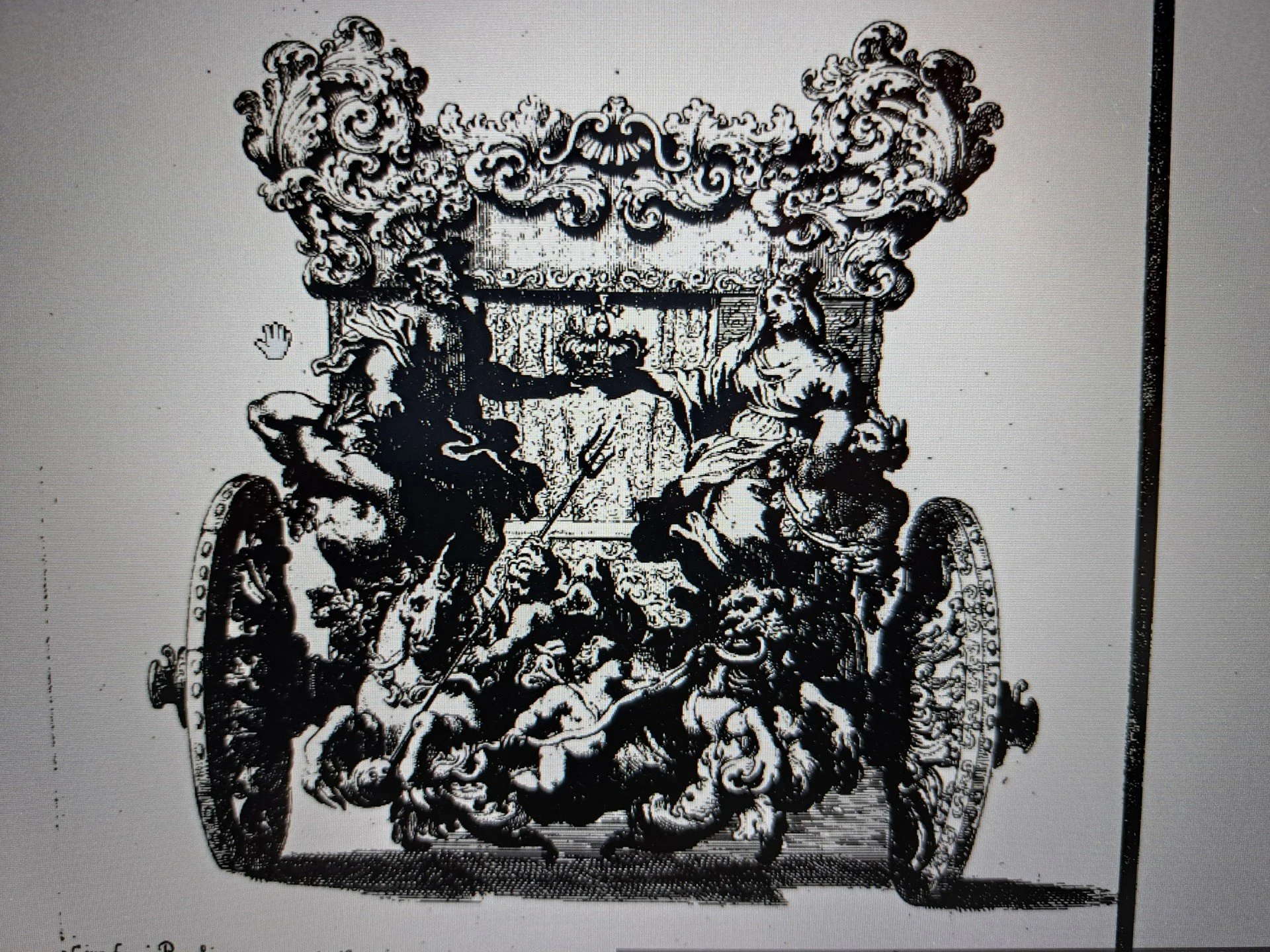
Figure. 2: The lead carriage in Palmer’s entrance procession, from John Michael Wright’s Account of his Excellence Earl of Castlemaine’s Embassy to His Holiness Innocent XI (1687).
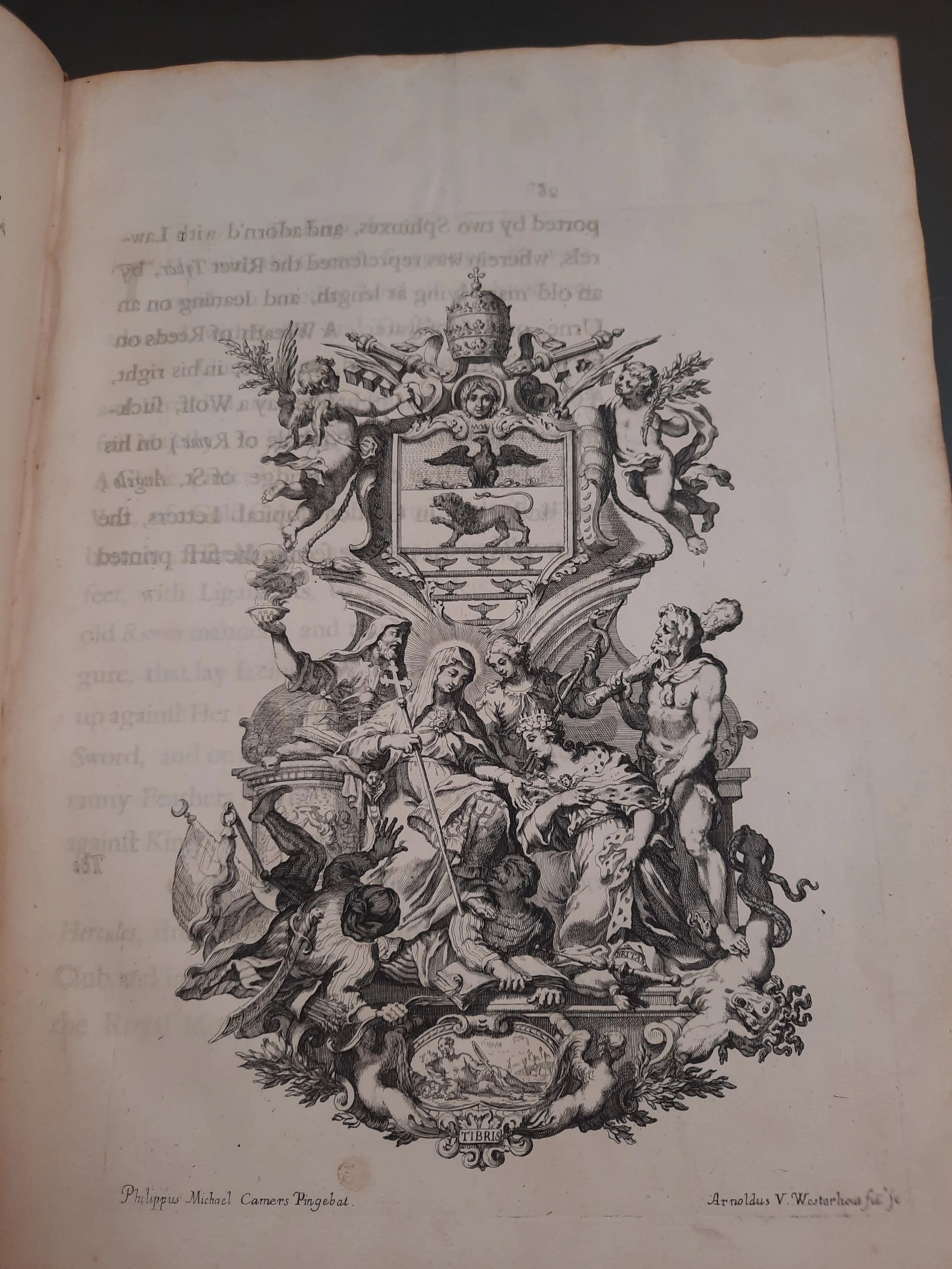
Figure 3: The Papal Coat of Arms, from John Michael Wright’s Account of his Excellence Earl of Castlemaine’s Embassy to His Holiness Innocent XI (1687).
The images, then, were out of step with the action. The engravings in Wright’s Account were made by Arnold van Westerhout, one of Rome’s most prominent engravers and print sellers, after designs by the Roman artist Giovanni Battista Leonardi. Wright, as author of the account and designer-in-chief of the procession, undoubtedly had a hand in the illustrations. The tone is one of glorious union. A 24-foot statue, wrought from 800-weight of iron, shows the papal coat of arms above a scene in which Britannia (trampling on envy) paid homage to the female figure of the Church. [Figure 3.] On the reverse (described, but not pictured, by Wright), James’s coats of arms was set above a parallel scene of Britannia trampling on parliamentary forces, and Hercules trampling on Protestantism while wielding a club emblazoned with the royal motto ‘Dieu et mon droit’ [11]. That is what the images purported to show. But what did audiences in England see in them? Those who wanted to see conspiracies at work to undermine England could easily see it here. The image could easily be misread as an ambassador working for Antichrist and against the state rather than seen for what it was: the cheap drama of over-wrought panegyric.
James had been suspected of ‘popery and arbitrary government’ since his conversion to Rome in 1673 and marriage to Mary Beatrice of Modena. Attempts to block that succession between 1678 and 1681 (The ‘Exclusion’ or ‘Succession’ crisis) had seen England haunted by the spectre of civil war [12]. In those years, fears of popery and fears of puritanism competed to outdo one another. As king, James alienated his support base in the Church of England by using his royal prerogative to suspend the penal code, giving non-conformist Protestants and Catholics a freedom to worship that undermined the ideal of religious uniformity at the centre of England’s constitution and promoting ‘popery’ in contradiction to the Royal Supremacy. The arbitrary manner of that promotion – royal declaration not an act of parliament – was seen as a misuse of royal prerogative and ‘proof’ of James’s tyranny. Coupled with events in Tyrconnell’s Ireland, it was easy for those prone to fears of ‘popery and arbitrary government’ to be overcome by them in 1686-7 [13]. Those fears shaped the context in which the reestablishment of diplomatic relations to the papacy occurred.
And in that context, Wright’s frontispiece was extraordinary [Figure. 1]. An image of the English and Scottish crown submitting to Rome was grist to a conspiracy-theorist’s mill. ‘Kissing the pope’s foot’ had been a verbal and visual motif of English Protestantism for over 150 years, a shorthand for the twin evils of popish corruption – tyranny and idolatry. It was an act of homage taken as proof that the papacy aspired to world-dominion, expecting even princes to abase themselves before him. It was believed to be a mark of Antichrist.
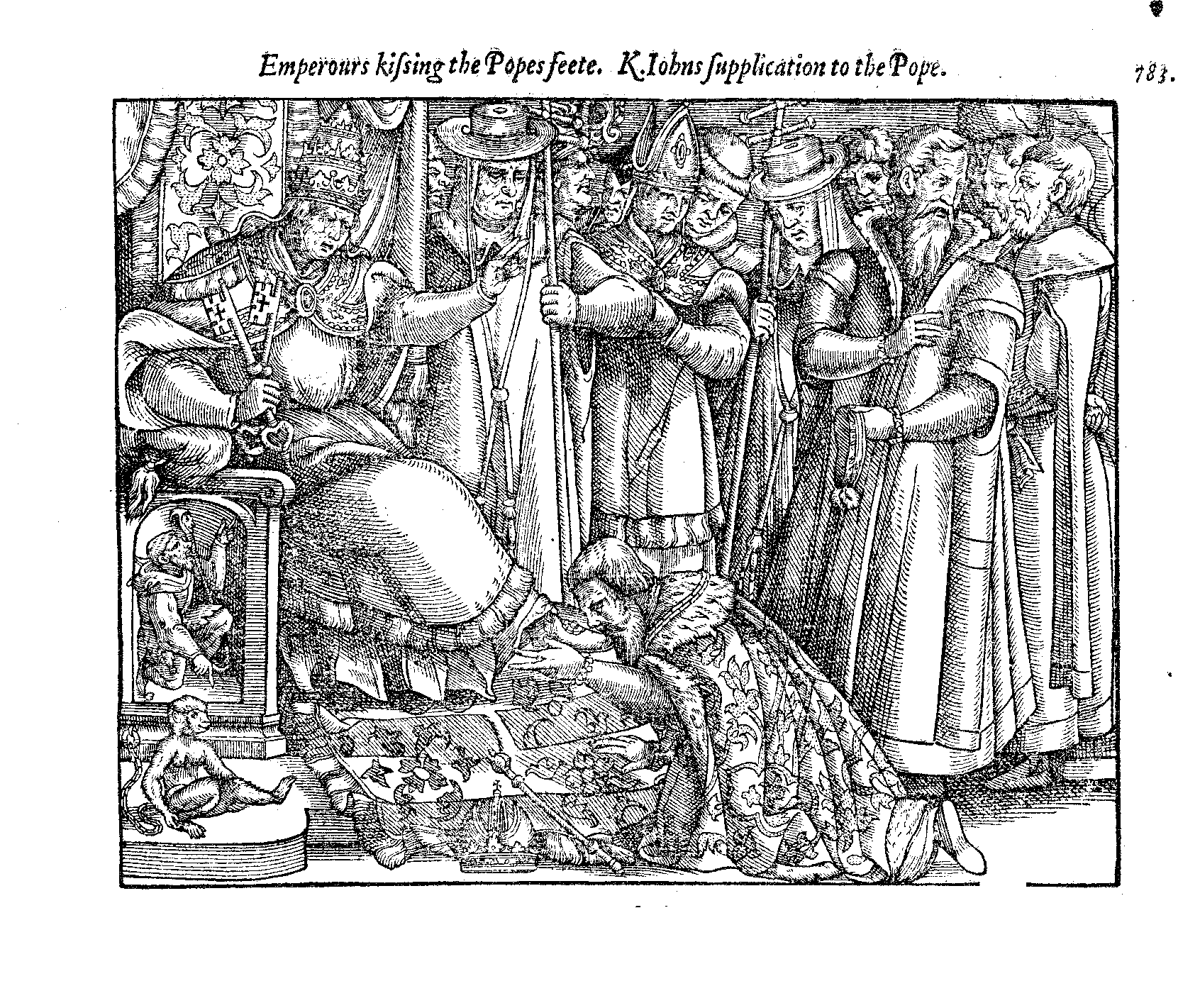
Figure 4: Emperors kissing the Popes toe, from ‘The Proud Primacy of Popes’ in John Foxe, Acts and Monuments (1570).
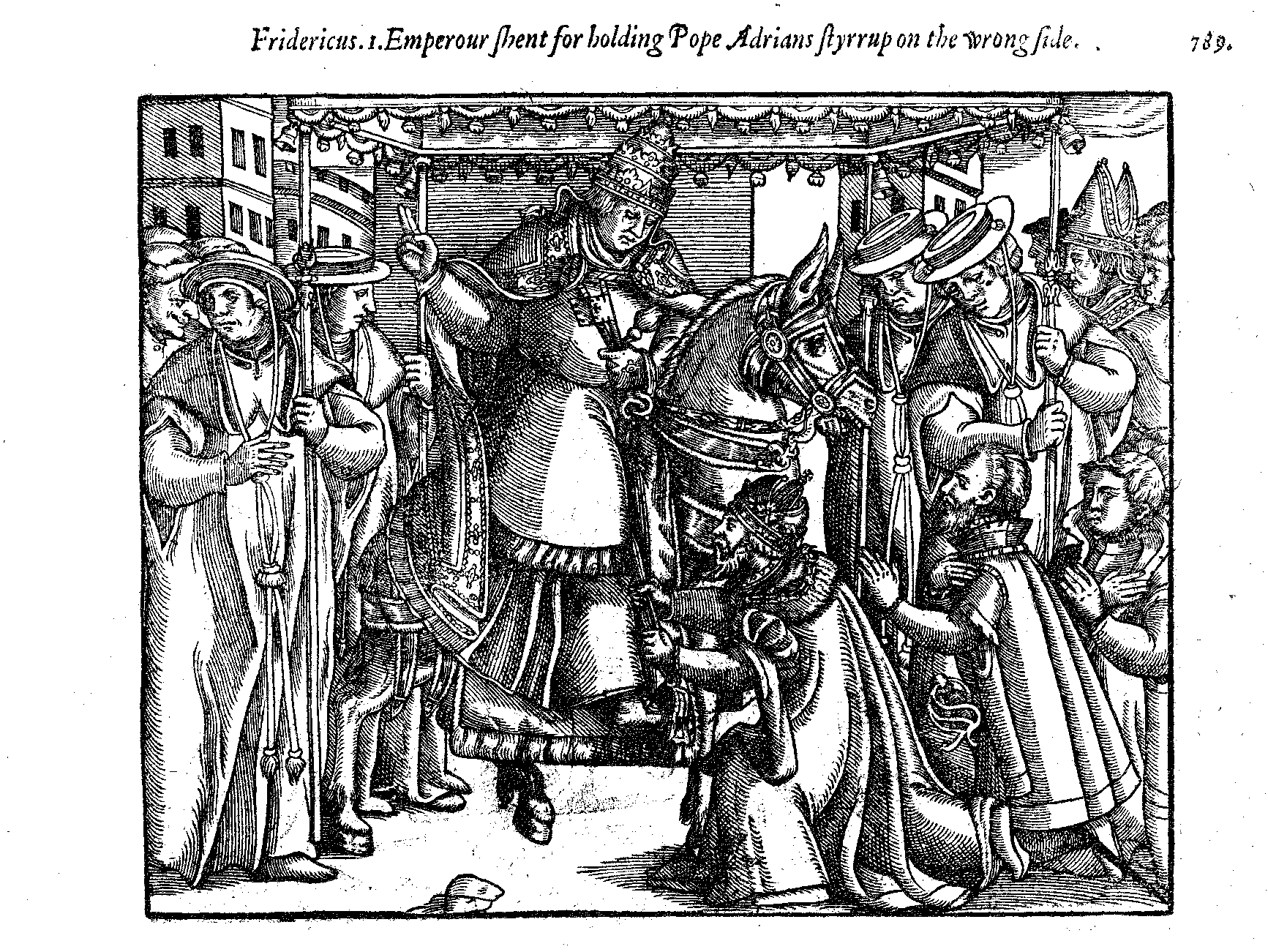
Figure 5: Princes paying homage to the Pope, from ‘The Proud Primacy of Popes’ in John Foxe, Acts and Monuments (1570).
That motif had featured heavily in Protestant polemic during the reigns of Henry VIII and Edward VI [14]. Its reversal – in which English kings used the pope as their footstool – was used in art at both of their courts to celebrate the break from Rome and present the Reformation as a triumph over popery. The image was associated most closely with the 1570 edition of John Foxe’s Acts and Monuments, which contained an expanded anti-papal iconography in the wake of Elizabeth I’s excommunication by Pope Pious V [15]. ‘The Proud Primacy of Popes’, a series of 12 woodcuts at the end of volume 1 of the Acts and Monuments, retold the history of the church as the creeping corruption of antichrist in the papacy. ‘Kissing the pope’s foot’ imagery is the nadir of that corruption, showing the papal pride as the inversion of Christ’s humility and damning Roman usurpation of the power of princes. In one image, emperors are seen being made to kiss the pope’s foot. In another, princes kneel as vassals before a pope on horseback [Figures 4 & 5].
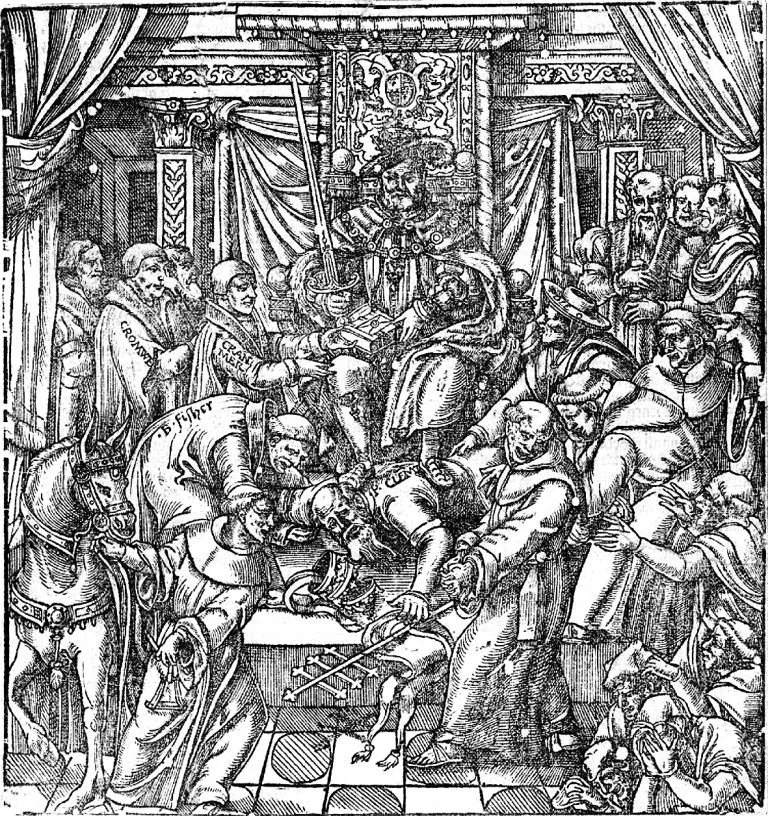
Figure 6: Henry VIII triumphing over the pope, from in John Foxe, Acts and Monuments (1570).
When readers opened volume 2 of the Acts and Monuments, they were greeted with an inversion of that iconography, an allegory of the Reformation in which Henry VIII used Pope Clement VII as his footstool in imperial style [Figure 6]. The iconography was inherited from Luther’s Reformation. Lucas Cranach’s Passional Christi und Antichristi (1521) drew a series of contrasts between the virtues of Christ and the vices of the pope, neat binaries adapted in English Protestantism to reify the virtues of godly magistrates [Figure 7].
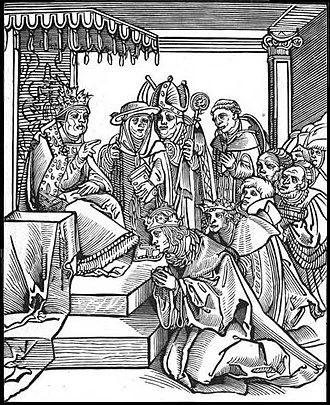
Figure 7: Lucas Cranach, Passional Christi und Antichristi (1521).
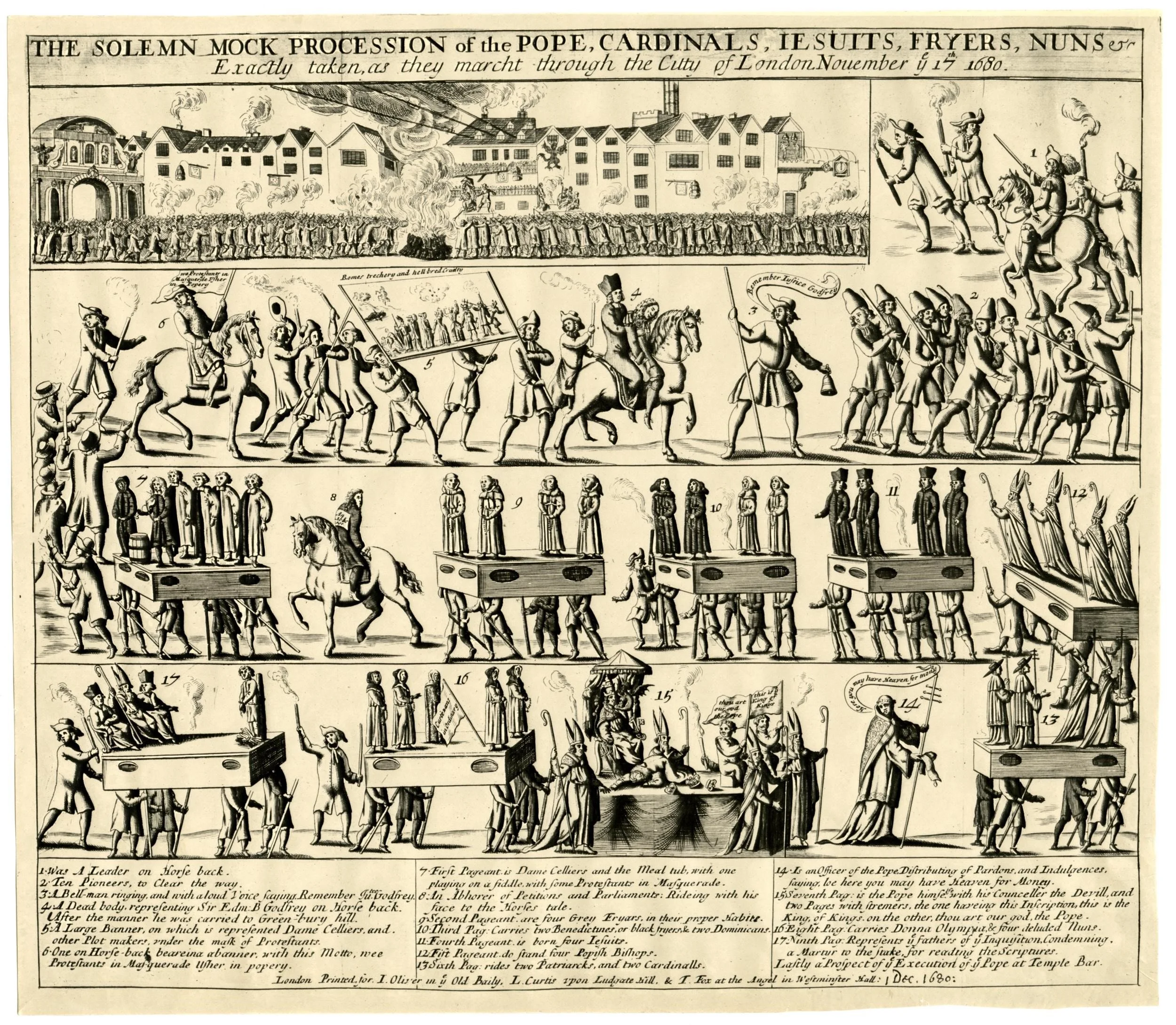
Figure 8: The Solemn Mock Procession of the Pope (1680). Copyright of the Trustees of the British Museum. Princes kiss the pope’s foot on the middle float in the bottom row.
The subsequent history of that iconography is long. It was used to glorify Elizabeth I – pictured in Foxe as triumphant over the pope – and James VI/I. In polemic, ‘kissing the pope’s foot’ was a slur hurled at protestants not deemed to be protestant enough throughout the sixteenth and seventeenth centuries, backsliders and fifth columnists engaged in popish pacts to undo the Reformation. It became an everyday part of popular Protestantism, and it was used frequently up to the moment that Wright’s Account had appeared. In the early 1680s, kissing the pope’s foot had featured in the final float of the pope-burning procession that had snaked through London’s streets before 200,000 spectators in protest at the Popish Plot. The pope’s foot was being kissed by effigies of lukewarm protestants (most likely Tory politicians and Anglican loyalists) who would not vote to exclude James [Figure 8].
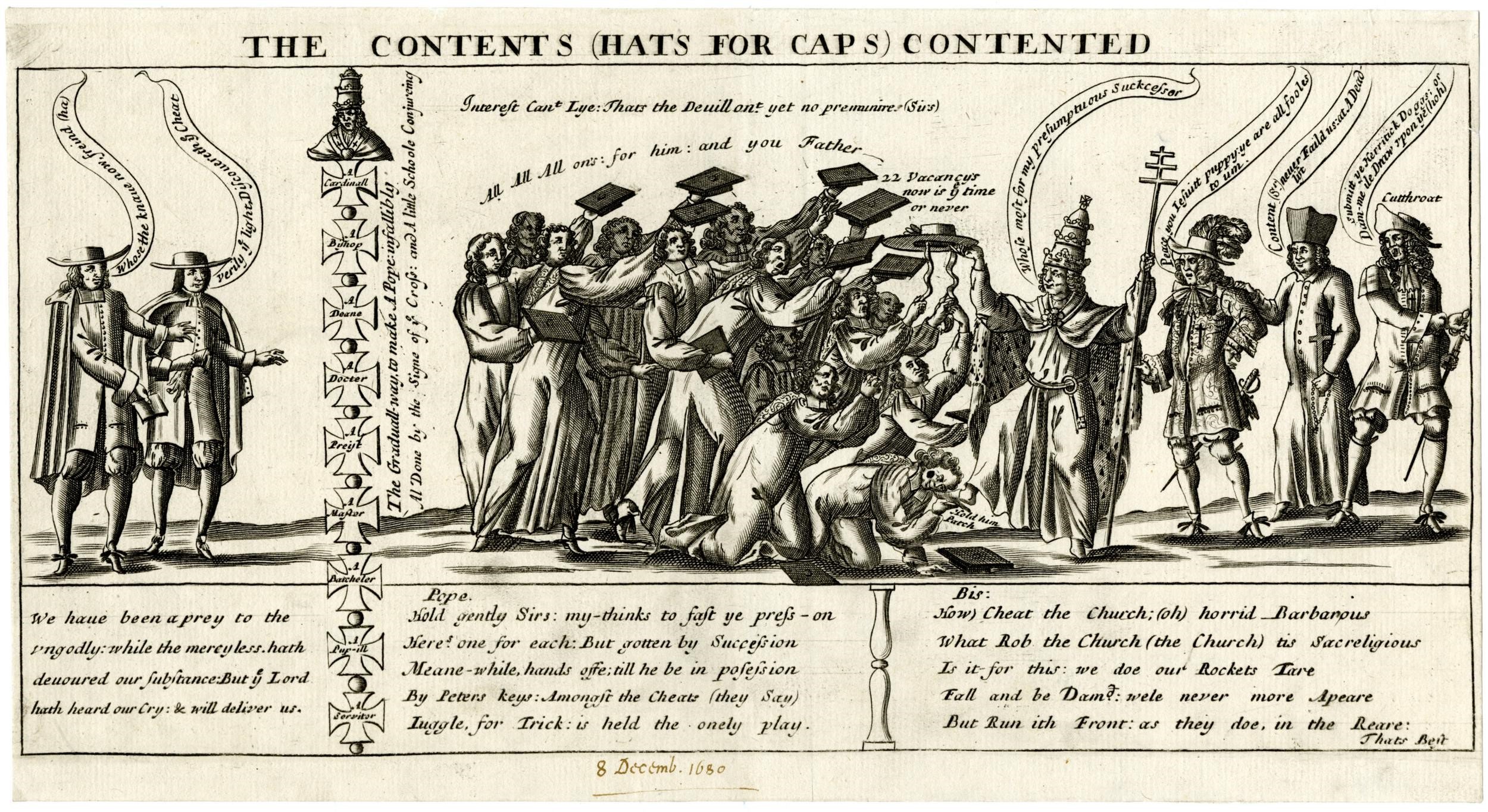
Figure 9: The Contents: or, Hats for Caps (1680). Copyright of the Trustees of the British Museum.
Those same protestants – the bishops of the church of England – are seen rushing to kiss the pope’s foot in exchange for Cardinal’s hats in Stephen College’s The Contents (1680), an indictment of the bishops voting down the bills of exclusion in the Lords [Figure 9]. And it would go to be an icon of Protestant liberty in subsequent periods, reappearing whenever the Protestant interest thought itself threatened by measures to ease the penal code or to secure Catholic emancipation [Figures 10-11].
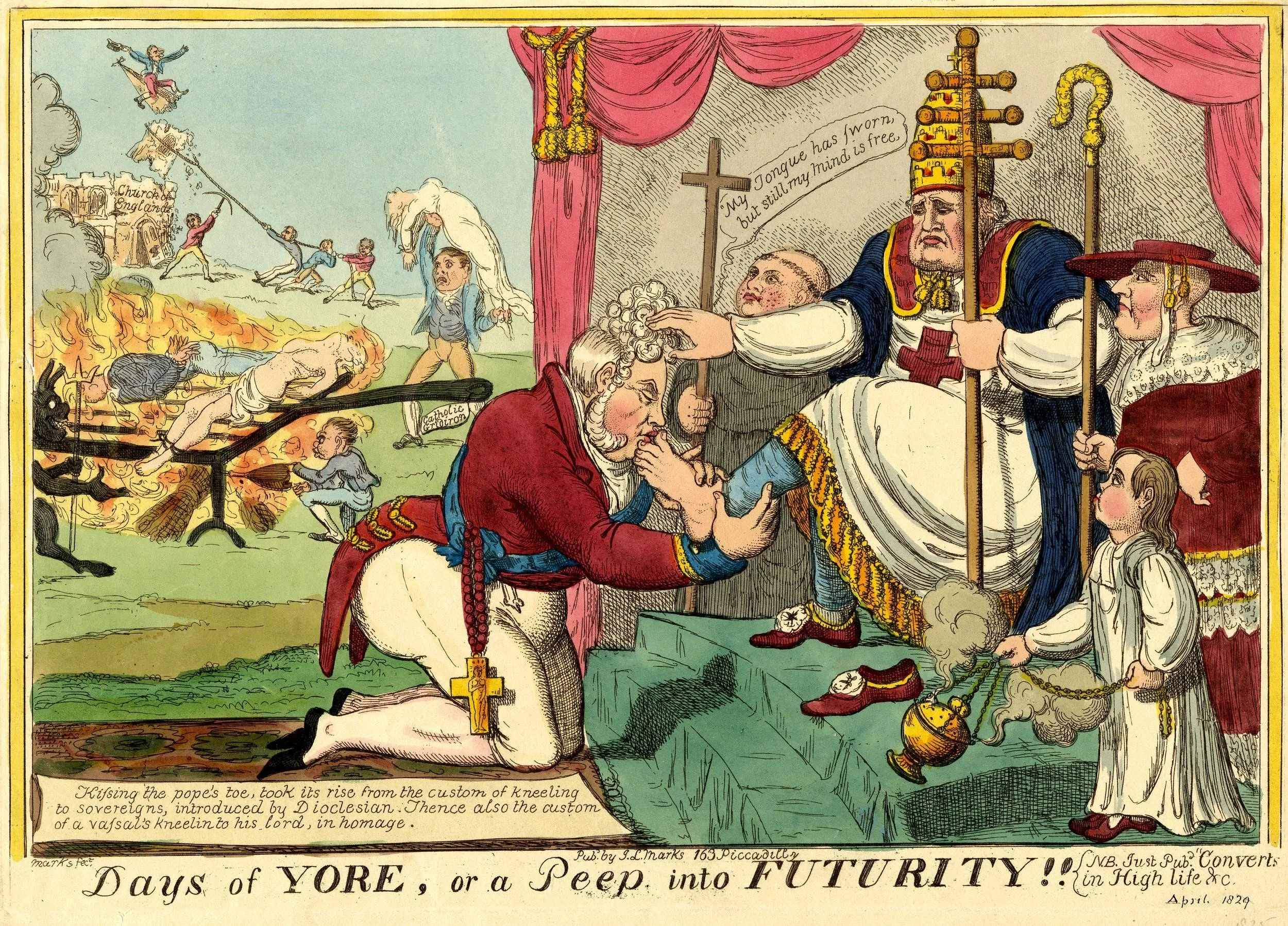
Figure 10: Days of Yore, Or a Peep into Futurity (1821). Copyright of the Trustees of the British Museum. George IV kisses the pope’s toe as fires of persecution rage in the background
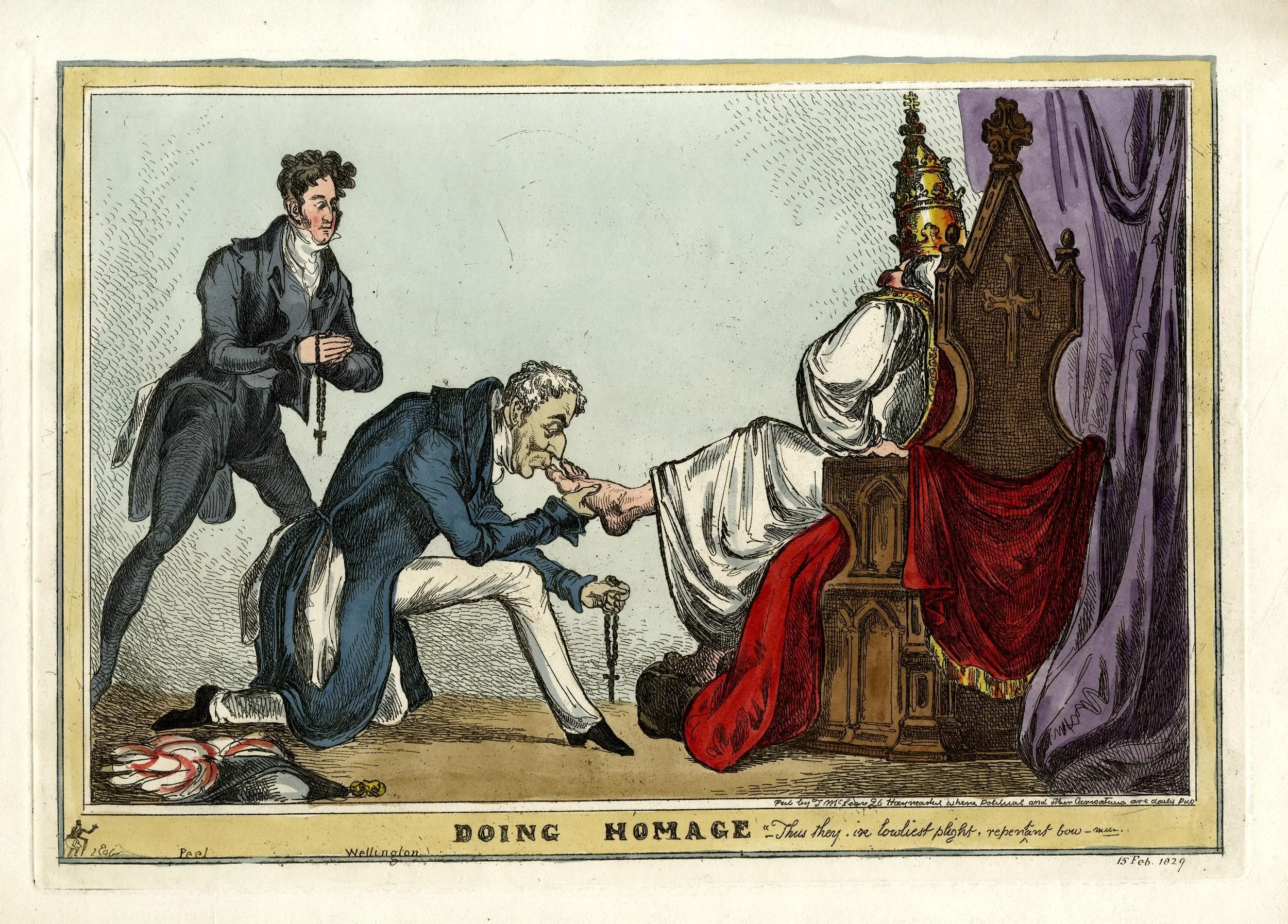
Figure 11: Doing Homage (c.1828-30). Copyright of the Trustees of the British Museum. Wellington (foreground) and Peel (behind) kiss the pope’s toe. Both hold rosaries. A satire mocking them for selling out England to the papacy by pursuing emancipation.
The point I am making is simple. When Wright commissioned this image, he knew its iconography was inflammatory. We might read this in two ways. At face value, it testifies to the belief, no doubt sincere, that the reestablishment of diplomatic relations with Rome was a triumph for English Catholicism which, combined with James’s moves toward toleration, promised more. But the image seems to speak to something else. Its wry subversion of an anti-Catholic norm is cutting. Its inclusion in an account about Palmer – who had felt the brunt of the worst anti-Catholic prejudice only five years earlier – seems targeted to provoke. John Michael Wright’s Account of his Excellence Earl of Castlemaine’s Embassy to His Holiness Innocent XI is a bad book about a damp squib. But it was written by a man with a keen sense of humour.
[1] John Michael Wright, Account of his Excellence Earl of Castlemaine’s Embassy to His Holiness Innocent XI (1687), frontispiece. For John Michael Wright, see S. Stevenson and D. Thomson, John Michael Wright: the king's painter (Edinburgh: Scottish National Portrait Gallery: 1982); J. Fenlon, ‘John Michael Wright's “Highland laird” identified’, Burlington Magazine, 130 (1988), 767–9; J. P. Ferris, ‘The return of Michael Wright’, Burlington Magazine, 124 (1982), 150–53; A. J. Loomie, ‘John Michael Wright's visit to London in the summer of 1655’, Burlington Magazine, 129 (1987), 721.
[2] On the embassy see Palmer’s entry in the Oxford Dictionary of National Biopgraphy online. Palmer had experience of diplomacy. He had accompanied Sir Daniel Harvey on diplomatic missions under Charles II. He was also well travelled, having visited Constantinople, Jerusalem, and north Africa.
[3] John Miller, James II (New Haven, 2000), p. 152.
[4] Palmer had longed defended Catholics. In 1666, as Catholics were blamed for the fire of London, his The Catholique Apology asserted their loyalty to the monarchy. His A Short and True Account of … the Late War between the English and Dutch (1671).was a patriotic account of the Dutch war written in a similar vein. The Apology was attached by William Lloyd, Stillingfleet, and others, who doubted claims of Catholic loyalty. The Earl of Castlemaine's Manifesto (1681) defended himself and fellow Catholics from charges brought during the Popish Plot.
[5] Miller, James II, pp. 152-54;
[6] Latian refers to the area and people of Italy around Rome, with particular reference to ancient periods.
[7] Flamian Way. This refers to the Via Flaminia, the ancient road leading from Rome to Rimini on the Adriatic Sea. It was built c.220BC during the rule of Gaius Flaminius.
[8] Wright, Account, page 116. For other verses see 113-15.
[9] Ibid., pp. 3-20.
[10] Ibid., pp. 34-37.
[11] Ibid., pp. 23-27 (image at 26). A description of the king’s coat of arms follows immediately after.
[12] Mark Knights, Politics and Opinion in Crisis (Oxford, 1994).
[13] For a good overview, see Tim Harris, Revolution: The Great Crisis of the British Monarchy, 1685-1720 (London, 2006).
[14] John N King, Tudor Royal Iconography: Literature & Art in an Age of Religious Crisis (Princeton, 1989), chapter 4.
[15] The expanded 1570 of John Foxe’s ‘Book of Martyrs’ was crucial here. On this, see Elizabeth Evenden and Thomas Freeman, Religion and the Book in Early Modern England: the making of Foxe’s ‘Book of Martyrs’ (Cambridge, 2010), chapter 6; Margaret Aston & Elizabeth Ingram, ‘The Iconography of the Acts and Monuments’ in David Loades ed., John Foxe and the English Reformation (Aldershot, 1997).